


PropTech Connect 2025 celebrated the pace of innovation transforming the built environment, as asset owners and Build-to-Rent (BTR) operators explored how to harness smarter tech, AI tools and data to gain a true competitive edge. Over two days at the InterContinental London – The O2, discussions with Zutec revolved around a clear message: in an era defined by digital intelligence, the ability to trust, search, and act on building information in seconds is what separates forward‑thinking operators from those held back by inefficiency and risk.
Find What Matters: The Data Foundations for AI-Driven Building Information

What we saw at PropTech Connect
PropTech Connect brought together thousands of real estate and technology leaders to explore how digital tools are changing the way assets are developed, operated and valued. For Zutec, the gathering of asset owners, BTR operators, and developers brought a sharp focus to one key issue: how to improve the management of building data from handover through to ongoing asset management.
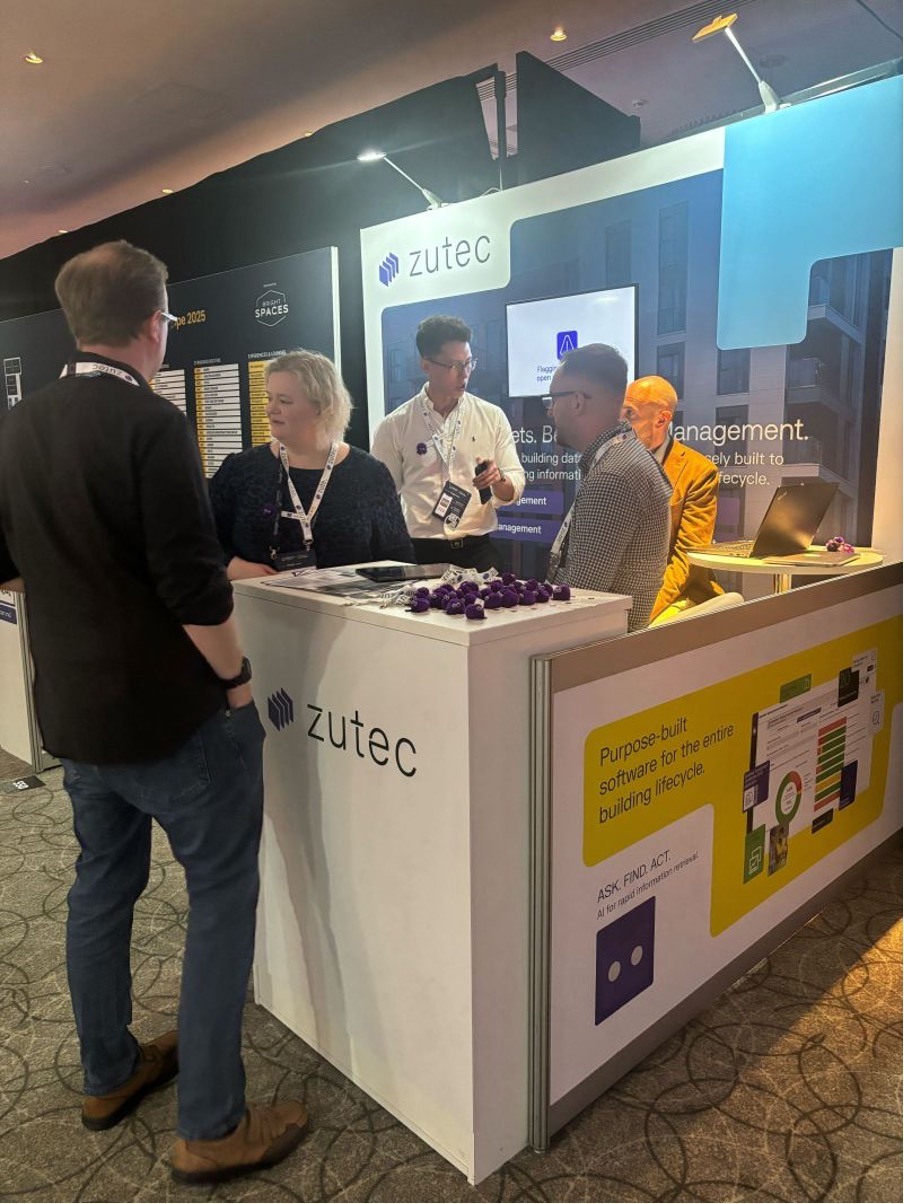
At our booth, we hosted meetings with existing customers and new prospects, many of whom are wrestling with fragmented documentation, legacy systems and inconsistent data models across their portfolios.
The strongest engagement came when discussing how to shift from PDF-based, project-by-project handovers to a structured, portfolio-wide approach—one where building information is standardised, searchable, and continuously updated as a living record for both new developments and existing buildings undergoing digitisation.
How technology can help with compliance
Since coming into force, the Building Safety Act has created clearer duties for clients. Principal designers, principal contractors and accountable persons now need to digitise data to better manage building safety risks throughout the lifecycle of higher-risk buildings. That includes maintaining accurate records, evidencing decisions and keeping a “golden thread” of information available and up to date.
In conversations with asset owners and operators, this translated into very concrete concerns: how to bring information into one place and prove compliance quickly during inspections, how to demonstrate that resident safety risks are being actively managed, and how to avoid gaps, especially when buildings are acquired, refinanced or remediated. Many attendees we spoke to acknowledged that spreadsheets, shared drives, and email trails simply cannot scale to meet the new regulatory burden, especially across large BTR and multifamily portfolios, where more than one property is being managed.
Pipeline pressure in BTR and multifamily
During the “Unleashing the Full Potential of BTR and Multi-Family Properties” panel, James Cannon, Managing Director and CRO at Zutec, highlighted how the Act has rightly raised the bar on accountability and transparency but has also slowed delivery pipelines. New Gateways, more rigorous information requirements and closer regulatory scrutiny are lengthening programmes where data is disorganised or scattered across multiple stakeholders and systems.
The message from the panel and the audience discussion was clear: the answer is not to lower standards, but to harness information management so compliance becomes a byproduct of how projects are run and assets are operated. Operators that invest in structured data models, consistent digital handover and centralised document management now are better placed to accelerate future projects, reduce rework and give investors more confidence in their pipelines.
Why a single source of truth matters
A recurring theme at our meetings was the move towards a single, portfolio-wide platform for building information; a “single source of truth” spanning design, construction and occupation. Asset owners want to standardise digital handover requirements, ensure contractors deliver data in usable formats, and then keep that information live for operations, maintenance and compliance over the long term.
In practical terms, that means being able to access data more easily and answer questions such as “which of my blocks have non-compliant fire doors?” or “where is the latest fire strategy drawing for this building?” in seconds, not hours. Centralising and structuring data also supports strategic decisions, from prioritising remediation programmes to planning capital works and benchmarking performance across high-rise portfolios. And crucially, this same foundation makes it far easier to apply emerging technologies like AI, which rely on consistent, well-structured information to deliver real operational value.
AI as an accelerator for compliance and operations
On the topic of AI, PropTech Connect was also a chance to show how AI is moving from buzzword to practical tool for building safety and asset management. At the Zutec booth, attendees saw how our AI chatbot layered on top of structured building data can surface critical information instantly, whether that is a specific O&M manual, a fire door inspection record or a certificate needed for an upcoming audit.
The power of this approach lies in combining consistent information models with natural language access, so site teams, asset managers and compliance leads can all interrogate the same dataset without needing to understand system structures. When AI is underpinned by robust information governance, it becomes an enabler for the Building Safety Act’s intent: faster, clearer decision-making, better resident engagement and a more proactive, data-driven approach to managing building safety risks.
Key takeaways for asset owners and BTR operators
For asset owners, the event reinforced that innovation in data management is now central to operational resilience and portfolio performance. Success increasingly depends on how effectively organisations can standardise data through areas like specifying digital handover to contractors, consolidating legacy records, and adopting solutions with AI‑embedded information management to unlock insights, streamline operations, and protect long‑term asset value. Those leading this shift are setting the standard for transparency, efficiency, and smarter decision‑making across the built environment.
For BTR and multifamily operators, the opportunity is to convert today’s compliance pressure into a long-term competitive advantage by building a resilient digital backbone for their portfolios. The conversations at PropTech Connect confirmed that the sector is ready to move beyond fragmented systems and towards a more connected, intelligent way of managing building information, and Zutec is committed to being a partner in that shift.
If you are an asset owner keen to build out consistent data models across your portfolio, read our booklets on specifying digital handover and data migration. And if you’re curious to learn about how intelligent conversational AI can give you accurate, document-backed answers immediately, you can join the waitlist for early access to Zutec AI.